
HERBAL
MATERIA MEDICA
DEFINITION
The term “materia medica” is latin for “healing materials.” In herbal medicine it refers to the body of knowledge that describes how plants can be used for healing purposes.
The term dates back to Roman times when Greek physician and botanist Dioscorides published a five-volume work called De Materia Medica. It served as the foundation of pharmacology and botany for 1,600 years, detailing the therapeutic properties of over 600 plants, animals, and minerals. until updated herbals were written in the Renaissance, one of which is Carl Linnaeus’ Materia Medica. (Linnaeus is the father of modern taxonomy, and the reason why we have standard, international botanical names.)

MONOGRAPH
A materia medica includes a collection of herbal monographs. A monograph is an organized set of information about a specific plant, collected into a report. Materia Medica is fundamental for herbalists because it serves as the core body of knowledge that has been systematically collected over millennia, combining historical use, empirical evidence, and modern scientific findings about medicinal substances. It provides the essential framework for understanding how plants can be used safely and effectively for healing.
Information included in Materia Medica
Herb Identification
Latin binomial (names we use to identify different species) ; common names; parts used; growing information or preferred habitat; how and when to harvest. A visual reference is great for this section, and you may want to include a botanical description, too.
Actions and Energetics
The actions of an herb are the traditional pharmacology notes that describe what the herb does (like whether the herb is astringent or diuretic); Energetics are descriptions of how the herb behaves in the body (These take constitution into consideration- an herb can be cooling, moistening, warming, or drying.)
Specific Indications
Sometimes, you may read about or discover times when an herb is particularly well suited to a specific purpose. Whether the herb is appropriate for a specific kind of individual or a detailed circumstance, this is the place to note this information.
Clinical and Contemporary Use
This is the place to add notes from modern news sources and references to scientific literature and clinical trials.
Traditional Use and Folklore
This section is perfect for the interesting historical uses and lore associated with an herb.
Safety Issues and Precautions
Any known side effects should go in this section; cautions regarding use by children or use during pregnancy; potential drug interactions or allergies.
EXAMPLE OF MONOGRAPH
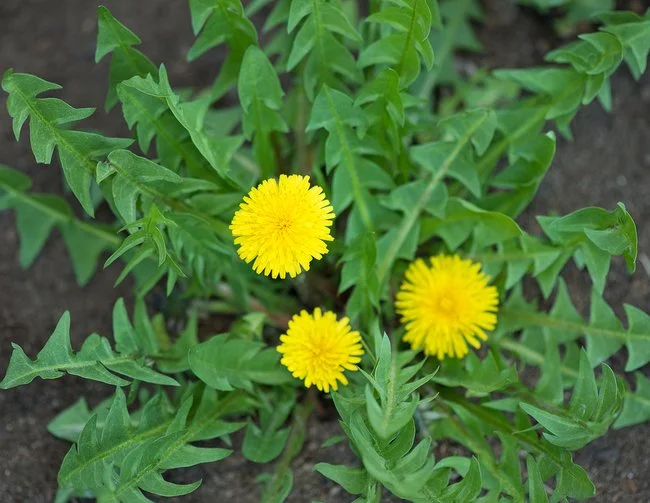
Dandelion is a common liver and kidney detox remedy
DANDELION
Taraxacum officinale
-
Dandelion, blowball, cankerwort, Irish daisy, monk’s head, priest’s crown, swine snout, wild endive, witch gowan, and yellow gowan
-
Asteraceae
-
Pu gong ying
-
Dugdhapheni or Simhadanti
-
Entire plant
-
Eurasia
-
North America, South America, Europe, southern Africa, New Zealand, Australia, and India.
-
Perennial with basal leaves that are spatulate to lanceolate, and deeply toothed. The stalks are hollow and leak a milky latex when broken. Each stalk holds one flower. What look like tiny petals on the yellow flower head are actually individual flowers themselves called florets. Roots are thick and unbranched.
-
Vitamins A and B. Leaf: calcium, potassium, iron, carotenoids, coumarins. Root: potassium, calcium, phenolic acids, taraxocoside, inulin.
-
There are some differences between the constituents of root and leaf though much overlap
sesquiterpene lactones (eg taraxacin, mongolicumin B, and taraxinic acid derivatives)
triterpenoids (eg taraxasterol, taraxerol)
phenolics such as chlorogenic, chicoric, and caffeoyltartaric acids, coumarins (aesculin and cichoriin), lignans (eg mongolicumin A), and taraxacosides
taraxalisin: a serine proteinase in the fresh latex (particularly in spring).
taraxinic acid 1′-O-beta-D-glucopyranoside (an allergen)
inulin (in the root)
-
Leaf – Bitter, Slightly sweet, Slightly salty
Root – Bitter, Slightly sweet -
Cooling, Drying
-
Alterative, cholagogue, diuretic, stomachic, aperient, tonic, bitter, laxative, adaptogen, anti-oxidant, anti-bilians and hepatic
-
Dandelion is known for being a liver and kidney tonic. It aids digestion, helps with breast tumors, abscesses, boils, fluid retention, stomach disorders and constipation. (1). It is one of the best remedies for hepatitis and potentially a preventative for breast cancer.
Emotionally releases tension, balances and puts one more in tune with self.
Studies have proven Dandelions affects on reducing inflammation and increasing bile production. A study done on mice has shown dandelion extract to up-regulate estrogen, progesterone and follicle-stimulating hormone receptors in mine . Another study showed a 32% success rate in curing Hepatitis B, meaning the Hepatitis B virus DNA became negative
-
Root tincture: 2-5 mL 3x/day (1:5 in 60%).
Root decoction: 2-3 teaspoons simmered in water for 10-15 minutes 3x/day
Leaf tincture: 5-10 mL 3x/day (1:5 in 50%).
Leaf infusion: 1-2 teaspoons dried leaf infused in 1 cup hot water for 15 minutes, 3x/day.
Fresh leaves can also be eaten steamed or raw.
Salve-Dandelion flowering tops, beeswax and oil
Dosage information from Medical Herbalism by David Hoffmann.
-
Dandelion has very few reported cases of contraindications. As with any plant there is the potential of an allergic reaction.
may rarely cause reactions in people very sensitive to other asters (ragweed, etc). Those with gallbladder or kidney issues should ask their doctor before taking dandelion. Those on blood thinners or diuretics should avoid dandelion. Dandelion is contraindicated in the case of acute gastric inflammation as it stimulates stomach acid (Holmes, 1997). Germany’s Commission E indicates dandelion is contraindicated when there is obstruction of bile ducts, gallbladder empyema, and ileus; in case of gallstones, use only after consultation with a physician (American Botanical Council, 1999).
Sources:
Tierra, Michael, and David Frawley. Planetary Herbology: An Integration of Western Herbs into the Traditional Chinese and Ayurvedic Systems. Twin Lakes, WI: Lotus, 1988. Print.
Edwards, Gail Faith. Opening Our Wild Hearts to the Healing Herbs. Woodstock, NY: Ash Tree Pub., 2000. Print.
Moore, Michael. Medicinal Plants of the Mountain West. Santa Fe: Museum of New Mexico, 2003. Print.
Kaminski, Patricia, and Richard Katz. Flower Essence Repertory: A Comprehensive Guide to North American and English Flower Essences for Emotional and Spiritual Well-being. Nevada City, CA: Flower Essence Society, 1994. Print.
Mars, Brigitte. The Desktop Guide to Herbal Medicine: The Ultimate Multidisciplinary Reference to the Amazing Realm of Healing Plants, in a Quick-study, One-stop Guide. Laguna Beach, CA: Basic Health Pub., 2007. Print.
Yarnell, E., and K. Abascal. “Dandelion (Taraxacum Officinale and T Mongolicum).” Integrative Medicine: A Clinician’s Journal (2009): 34-36. Web.
Latona, Brita “Materia Medica Dandelion Lecture” April 30, 2015.
Herbarium’s Dandelion Monograph
The Physiological Effects of Dandelion (Taraxacum Officinale) in Type 2 Diabetes - PMC