

Foundations of
Traditional Chinese Medicine
The TCM medical system is based upon how energy circulates through the body thru various pathways called meridians that are associated with specific organs.
Nature of Symptoms and Signs
Symptoms and Signs reflect the condition of the Internal organs and channels. Chinese Medicine takes into account many different manifestations as parts of a whole picture of the disharmony present in a particular person. All Signs and Symptoms are taken in consideration to identify the underlying disharmony. Therefore, Chinese Medicine does not look primarily for causes but patterns.
Patterns
Pattern (also called “Syndrome”) is a picture formed by the clinical manifestation of a person which point to the character, the site and the pathology of the condition.
Disease
In Chinese Medicine “Disease” is actually a symptom in Western Medicine. The same disease may manifest with different patterns and the same patter may give rise to many different diseases
The fundamental theories of Yin and Yang and their applications in understanding human physiology and pathology.
Factors of disease according to Traditional Chinese Medicine
Four methods of examination
Organ Pattern identification
Causes of Disease (external, internal, other)
Visual examination (head and face, eyes, ears, nose and mouth, teeth-gums, throat, skin, tongues)
COMING SOON
Chinese Materia Medica
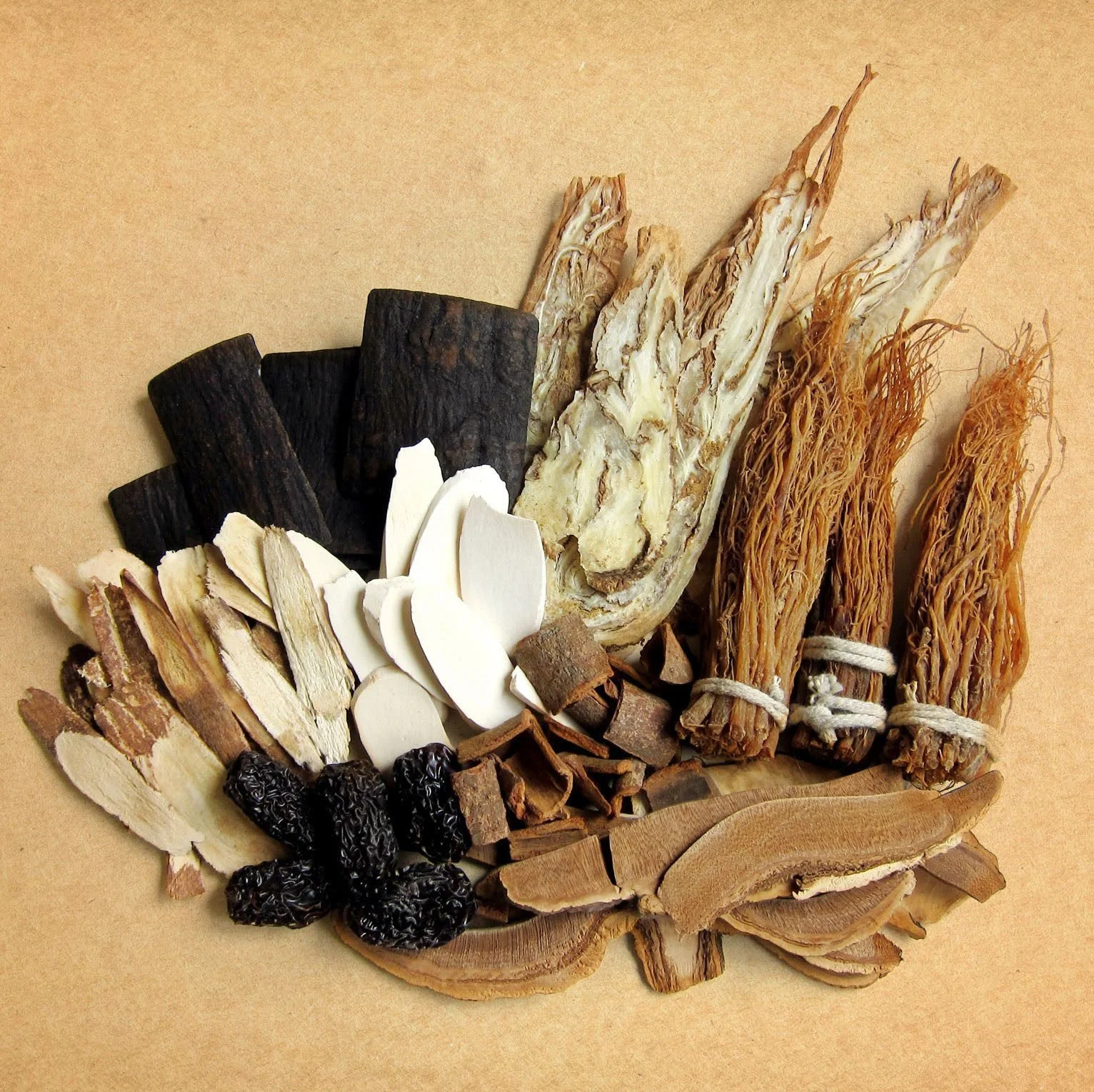
Chinese medical herbs are used in TCM (Traditional Chinese Medicine) as the main means to prevent and treat diseases and maintain health.
Bai Guo [Semen Ginkgo] – Ginkgo Seed
Bai He [Bulbus Lilii] – Lily Bulb
Bai Mao Gen [Rhizoma Imperatae] – Imperata Rhizome; White Grass
Bai Zhi [Radix Angelicae Dahuricae] – Dahurican Angelica Root
Bo He [Herba Menthae] – Field Mint
Chen Pi [Pericarpium Citri Reticulatae] – Aged Tangerine Peel
Ci Wu Jia (Siberian Ginseng) - Eleutherococcus Senticosus Cortex radix
Chuan Xiong (Szechuan Lovage Rhizome) - Rhizoma Ligustici
Dan Gui (Angelica Sinensis) - Angelica (Chinese) root
Da Zao [Fructus Jujubae] – Chinese Date
Fu Ling [Poria] – Poria; China Root; Indian Root
Gan Cao [Radix Glychyrrhizae] – Liquorice Root
Gou Qi Zi [Fructus Lycii] – Lycium Fruit; Chinese Wolfberry
Huang Qi - (Astragalus root) - Astragalus Membranaceus Radix
Ji Gu Ziang (Croton Chinese Root) -Croton Crassifolius
Jin Yin Hua (Honeysuckle Flower) -Lonicera Japonica Flos
Ju Hua [Flos Chrysanthemi] – Chrysanthemum Flower
Mai Men Dong (Ophiopogoms Tuber) -Ophiopogonis Japonicum Tuber
Ren Shen (Red Korean Ginseng) - Panax Ginseng
Rou Gui [Cortex Cinnamomi] – Cinnamon Bark
Sang Ye [Folium Mori] – White Mulberry Leaf
Shan Yao [Rhizoma Dioscoreae] – Chinese Yam
Sheng Jiang [Rhizoma Zingiberis Recens] – Fresh Ginger
Suan Zao Ren [Semen Ziziphi Spinosae] – Sour Jujube Seed
Tao Ren [Semen Persicae] – Peach Kernel
Xing Ren [Semen Armeniacae Amarum] – Apricot Seed or Kernel
Yuan Zhi (Radix Polygalae) Chinese Senega root
Zhe Bei Mu (Fritillaria Bulb) - Fritillaria Verticillata Bulbus
Zhi Zi [Fructus Gardeniae] – Cape Jasmine Fruit
Zi Su Ye [Folium Perillae] – Perilla Leaf
A COMPARATION BETWEEN TCM AND WESTERN MEDICINE
TCM : A Holistic and Individualized Approach
Body, mind, and spirit are interconnected. Optimal health depends on the balance and harmony among these aspects.
Evaluation of the patient’s body as a whole, considering their physical, mental, and emotional states.
TCM : Prevention and Holistic Care
By focusing on maintaining harmony within the body, practitioners can help individuals achieve optimal health before illness or disease arises.
Strengthen the body over time, addressing the underlying causes of ailments and improving patients’ overall well-being. Assessing the pulse, tongue, and body temperature to evaluate invisible blockages in the flow of energy
Use of natural remedies and techniques such as acupuncture, cupping, herbal medicine, and lifestyle changes to help the body heal from within.
Western Medicine: A Reductionist Approach
Scientific inquiry and the study of empirical evidence.
The focus is on symptoms and treatment them with targeted medications or interventions such as pharmaceuticals, surgery, or radiation therapy and to examine individual components of the body or disease to develop targeted treatments.