

Accademia
The word Accademia (Academy in English) derives from the ancient Greek Akadēmía (Ἀκαδημία), then passing through the Latin Academia and Italian Accademia.
Origin of the Name: The Sacred Grove, a green area outside the walls of Athens dedicated to the hero Academus.
The Academy was therefore founded in the sacred grove of Athens, where Plato taught.
Born as free spaces for intellectual exchange. The teaching was not therefore the exclusive monopoly of the scholar: other qualified members also gave lectures and conducted research, completely independently.
From the Renaissance onwards, it became a circle of scholars, then a cultural and scientific institution.
Academies of language, art, and science emerged in Italy, influencing language, art, and research up to the contemporary age.
During the Renaissance, Italy, driven by a renewed interest in Greco-Roman studies, saw the flourishing of academies inspired by the Platonic model. It was precisely in this context that the term "academy" acquired its current definition: a free assembly of scholars, gathered for the selfless pursuit of knowledge, language, the arts, and sciences. The first academies were not formal educational institutions, but rather cultural circles.
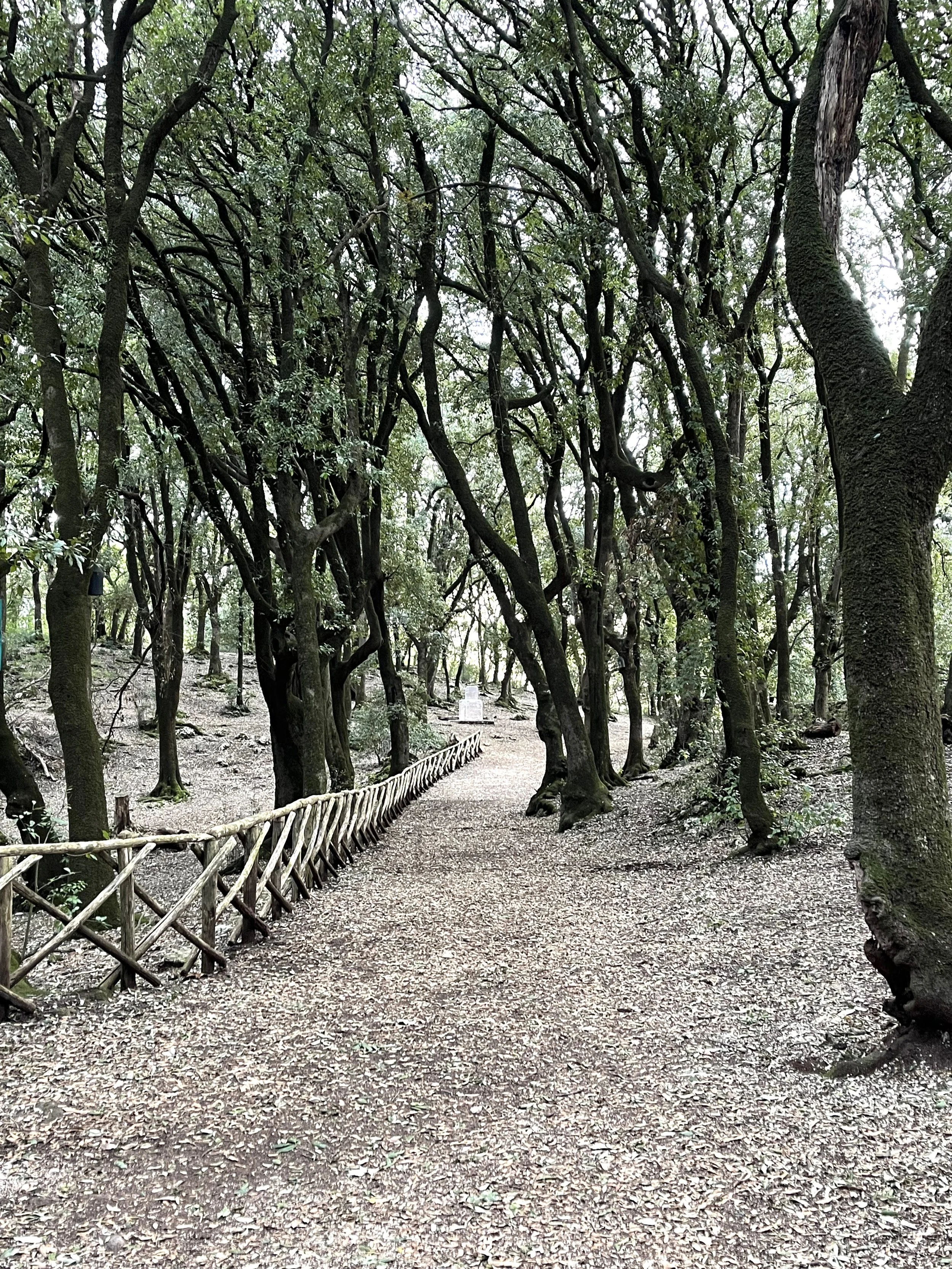
Bosco Sacro di Monteluco (Umbria, Italy)